Sunstroke and heatstroke in babies and toddlers
July 14, 2026

Katka

Hot weather can be much harder on babies and toddlers than on adults. Small children overheat faster, dehydrate more easily, and often cannot tell you clearly that they feel too hot or unwell. That is why heat-related illness in children aged 0 to 3 can escalate quickly if parents miss the early warning signs.
After a hot and demanding summer day, the Bibino baby monitor app can also help parents keep an eye on their baby’s sleep and notice whether the baby seems more restless, wakes more often, or squirms because of the heat.

What am I dealing with?
When people talk about sunstroke and heatstroke, they often mean the same dangerous situation: a child’s body getting too hot and no longer coping well.
In everyday parenting, it helps to think about it this way:
Sunstroke usually refers to overheating after too much direct sun, especially on the head and neck.
Heatstroke is more serious and can happen even without direct sun, for example in a hot room, a stuffy stroller, or a car.
There is also a milder stage, often called heat exhaustion, which can come before heatstroke. And alongside overheating, summer also brings another problem for very young children - sunburn, which can develop faster than many parents expect.
Recognizing these risks early is one of the most important ways to keep a child safe.
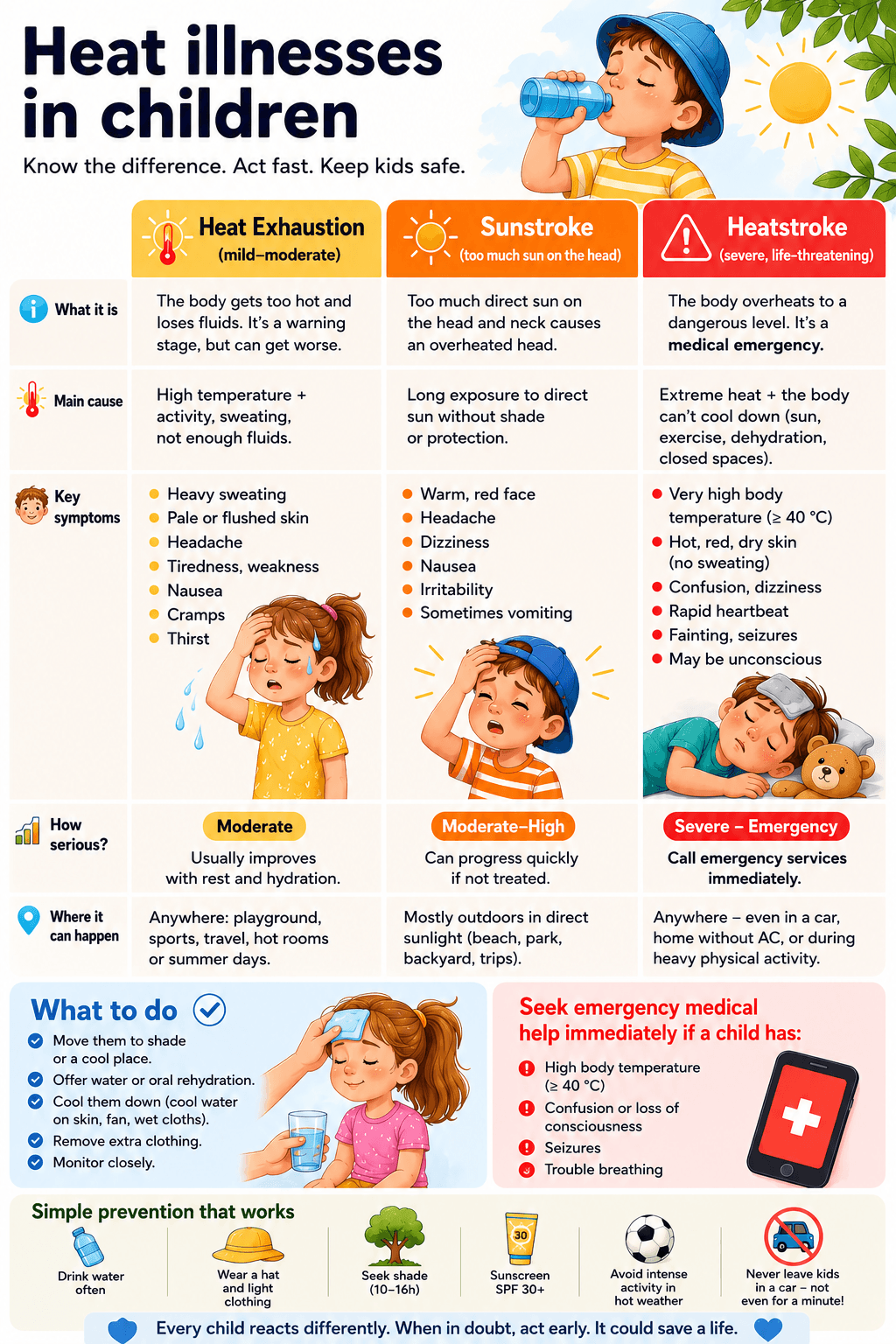
Download and print our infographic, to keep important information on your sight.
Why babies and toddlers are more at risk in hot weather
Children under 4 are more vulnerable in heat than older children and adults. Babies and toddlers have smaller bodies that heat up faster, lose fluids more quickly, depend on adults for shade, drinks, clothing, and timing, and cannot always explain clearly what feels wrong. They may also keep playing or stay outside even when they are already getting too hot.
This is why the same summer weather that feels merely uncomfortable for an adult can become genuinely risky for a small child.
The difference between heat exhaustion, sunstroke, and heatstroke
It helps to separate three levels of danger.
Heat exhaustion
Heat exhaustion is a warning sign that the body is struggling with heat and fluid loss. A child with heat exhaustion may become unusually tired or floppy, pale, sweaty or clammy, thirsty, cranky, dizzy, weak, nauseous, or simply “not right” in a way that feels unusual to the parent. At this stage, the child needs to be cooled down and watched carefully, because this is often the last warning stage before things become more serious.
Sunstroke
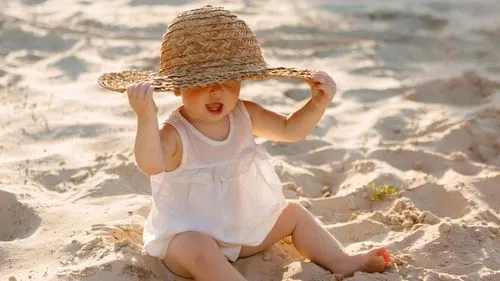
Sunstroke is usually linked to too much direct sun on the head and neck. In practice, parents may notice a warm red face, headache, dizziness, irritability, nausea, or a child who suddenly cannot cope well with being outside any longer. It can begin after staying in strong sun too long, especially without shade, a hat, or enough fluids.
Sunstroke should still be taken seriously, because in some children it can progress into more dangerous overheating if the child is not moved out of the sun and cooled down.
Heatstroke
Heatstroke is a medical emergency. It means the child’s body is overheating in a way that can become dangerous very quickly. Usually the child is not only hot, but also acting very differently, looking exhausted, or changing rapidly in a way that feels alarming.
Emergency warning signs include:
- confusion or unusual drowsiness,
- difficulty waking,
- a very high temperature,
- fast breathing or a markedly unwell appearance,
- repeated vomiting,
- seizures or collapse.
Important: If you think a child may have heatstroke, do not wait to “see if it passes.”
Signs of sunstroke, heat exhaustion, or heatstroke in babies and toddlers
The hardest part for parents is that young children do not always look “dramatically ill” at first. Sometimes the first changes are subtle.
Warning signs in babies
In babies, pay attention to unusual sleepiness, weak crying, poor feeding, and fewer wet diapers. Flushed or unusually hot skin, vomiting, irritability that feels different from normal fussiness, or a baby who seems limp, weak, or difficult to wake should also be taken seriously.
Warning signs in toddlers
In toddlers, common early signs may include becoming suddenly very tired, asking to be carried, acting dizzy or unsteady, crying more than usual, becoming unusually quiet, refusing food or drink, vomiting, or seeming confused or “not themselves.”
What to do right away if your child may be overheating
If your baby or toddler seems too hot but is awake and responsive, act quickly:
- Move them out of the sun or heat immediately.
- Take them indoors or into deep shade.
- Remove extra clothing.
- Cool them gradually with lukewarm water, damp cloths, or a cool bath.
- Offer fluids if they are awake and able to drink.
- Stay with them and keep watching how they respond.
Things that can help are a cool room, a fan for airflow, damp cloths on the skin, small frequent sips of fluid for toddlers, and breast milk or formula for babies, depending on age and feeding routine. The key is to respond calmly but without delay, because a child who seems only mildly overheated can deteriorate faster than many parents expect.
❗️When to call emergency help
Call emergency services or seek urgent medical help immediately if your child seems confused, is difficult to wake, collapses, has a seizure, vomits repeatedly, is breathing fast and looks very unwell, or has signs of severe overheating and is not improving quickly once cooled.
Also get urgent help if your baby is very young and unusually sleepy or floppy, your child cannot keep fluids down, you suspect they were left in a very hot car or enclosed space, or something about their condition feels seriously wrong. With very young children, it is better to overreact than to wait too long.
❌ What not to do
When a child is overheating, a few common mistakes can make things worse. The most common ones are:
- putting the child back into direct sun “for just a moment,”
- covering a stroller with a blanket that blocks airflow,
- forcing large amounts of fluid too quickly,
- using ice-cold water aggressively if it upsets the child,
- exposing sunburned skin to direct sun again,
- assuming unusual sleepiness is “just a nap” when the child also seems too hot or unwell.
And most importantly, do not wait too long once red-flag symptoms are present.
How to prevent heatstroke and sunstroke in children aged 0 to 3
Prevention usually comes down to timing, shade, airflow, and not staying out too long. In real life, that often means planning walks and outings for early morning or later evening, when the sun is less intense and children tire less quickly than they do around midday.
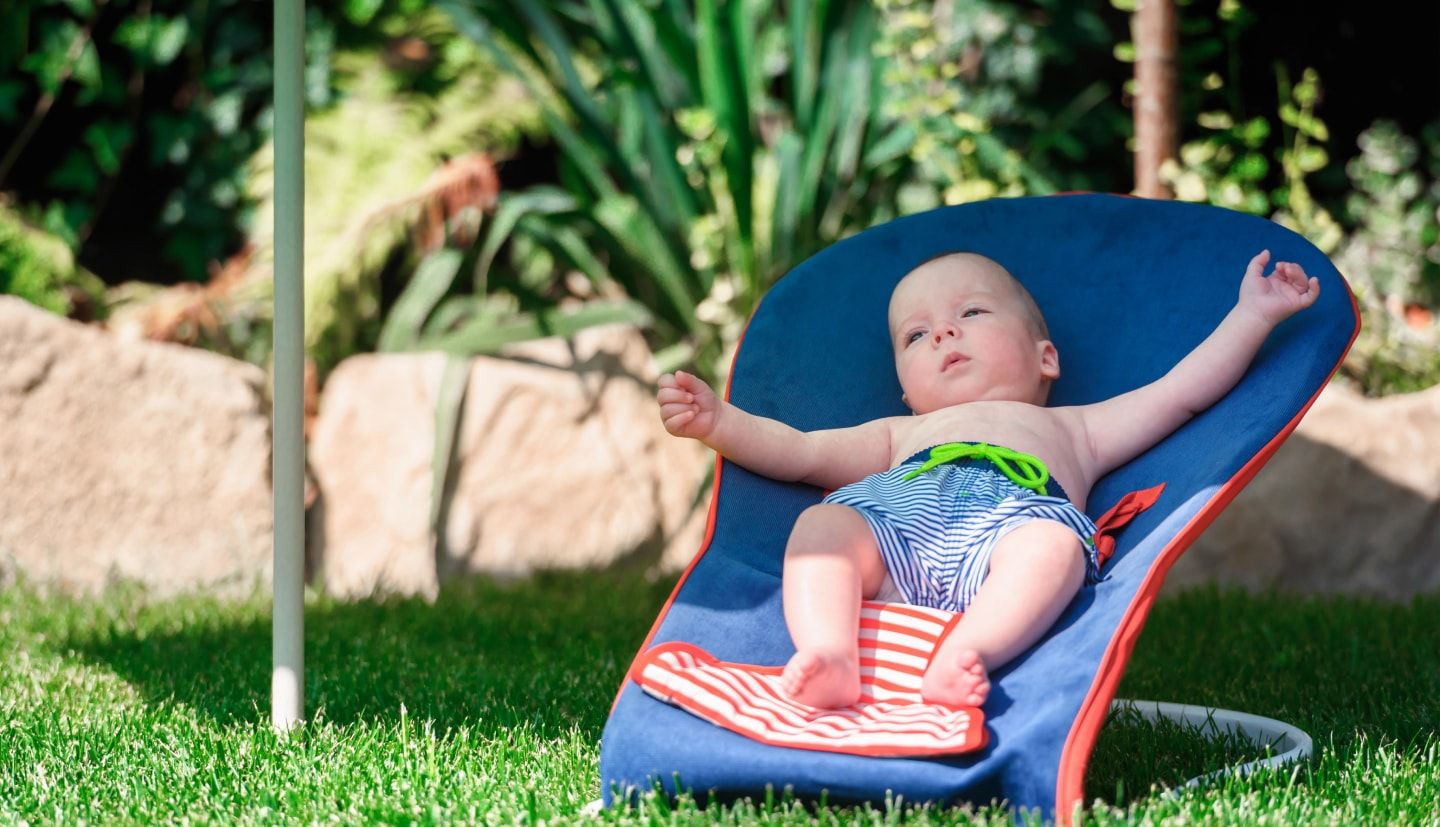
Clothing and environment make a bigger difference than many parents expect. Breathable layers are usually safer than overdressing, and babies in strollers or carriers can heat up much faster than the adult beside them. It also helps to treat shade as essential rather than optional. If there is no proper shade, the outing may simply not be worth pushing through.
In practical terms, the main things to watch are:
- keeping the stroller well ventilated and never trapping heat with a heavy blanket,
- offering fluids regularly in a way that fits the child’s age,
- never leaving a child in a parked car, even briefly,
- protecting the skin with shade, light clothing, and as little midday sun as possible.
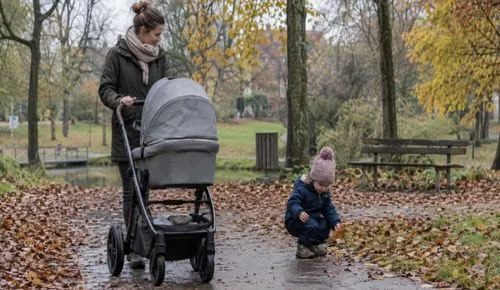
Strollers can trap heat surprisingly quickly, especially in still air, and that is why it helps to watch the whole environment around the child, not only the outdoor temperature.
Hot weather at home and sudden temperature changes
Heat-related illness does not happen only on trips or in direct sun. It can also happen in a hot bedroom, during a long car ride, in a poorly ventilated stroller, in a baby carrier on a very warm day, or in a home that stays overheated deep into the evening. That is why prevention is not just about sunscreen or hats. It is also about checking indoor temperature, airflow, and how long a child has been in a warm environment.
Parents also often underestimate how tiring quick temperature changes can be for babies and toddlers. Moving fast from outdoor heat into strong air conditioning, or from a cool room back into a hot street, can leave a small child flushed, sweaty, sleepy, unsettled, or harder to soothe, even if it does not lead to full heatstroke. What usually helps is slowing those transitions down, adding or removing layers gradually, and giving the child a moment to settle before moving on.
Recovery after mild overheating
If your child was too hot but improved quickly once cooled, the rest of the day should stay calm.
It usually helps to keep them indoors or in cool shade, continue offering fluids, avoid another hot outing that day, let them rest, and keep watching for any return of symptoms. If the child still seems off, too sleepy, keeps vomiting, or worries you in any way, get medical advice.
Frequently asked questions
1. What is the difference between heatstroke and sunstroke in children?
Sunstroke usually refers to overheating after too much direct sun, especially on the head. Heatstroke is the more serious overheating emergency and can happen even without direct sun.
2. Can a baby get heatstroke in a stroller?
Yes. A stroller can trap heat quickly, especially in direct sun or when airflow is blocked.
3. What are the first signs of overheating in a toddler?
Common early signs include unusual tiredness, irritability, thirst, pale or hot skin, dizziness, and vomiting.
4. When should I call an ambulance for a baby or toddler with overheating?
Call emergency help if the child is confused, hard to wake, collapses, has a seizure, vomits repeatedly, or does not improve quickly once cooled.
5. Can heatstroke happen indoors?
Yes. It can happen in hot rooms, cars, poorly ventilated strollers, or any enclosed warm space.
6. What should I do first if my child looks overheated?
Move them into a cooler place, remove extra clothing, start cooling them, offer fluids if they can drink, and watch closely for danger signs.
7. Are babies under 1 especially vulnerable in heat?
Yes. Babies heat up, dehydrate, and burn more quickly than older children, and their symptoms can be harder to read.
8. Can fast temperature changes upset babies and toddlers in summer?
Yes. Moving quickly between heat, shade, air conditioning, cars, and warm strollers can make small children uncomfortable and harder to regulate.
Conclusion
Overheating, sunstroke, and heatstroke are not small summer inconveniences in babies and toddlers. They can become serious faster than many parents expect. The most important things are noticing the first warning signs, cooling the child quickly, protecting the skin, and not hesitating when the situation feels more severe than “ordinary summer discomfort.”
With children aged 0 to 3, the safest approach is simple: shade, short outings, light clothing, attention to temperature changes, and a low threshold for asking for urgent help when something feels wrong.