How to dress babies and toddlers in summer
July 30, 2026

Katka
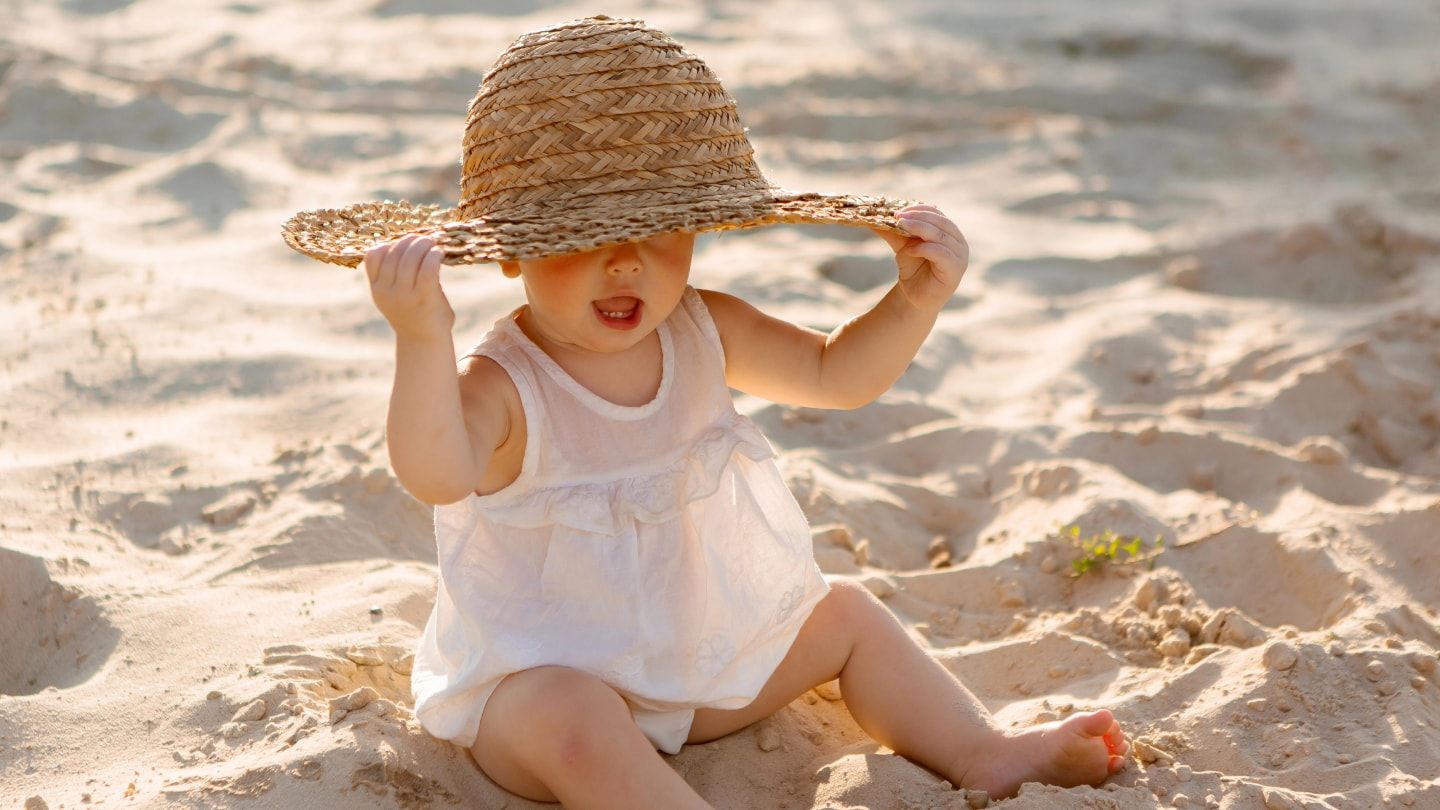
Dressing babies and toddlers in summer is rarely just about the number on the weather app. What works depends on age, shade, airflow, whether your child is in a stroller or carrier, and how quickly the day changes from cool mornings to hot afternoons.
The good news is that summer dressing can stay simple. Most children need fewer layers than adults expect, and with Bibino parents can also keep an eye on naps and notice whether heat seems to be making their baby more restless or uncomfortable.

The basic rule: light, breathable, and easy to adjust
In hot weather, the goal is not to make sure a child is “warm enough.” The goal is to help them stay comfortable without overheating.
That usually means soft breathable fabrics, as few layers as you can reasonably use, and clothing that is easy to add or remove. Light cotton and other breathable materials are usually the easiest choice. Tight, heavy, padded, or heat-trapping pieces are usually what causes more problems in summer, not too little clothing.
How summer dressing changes by age
Summer clothing does not look exactly the same for a newborn, an older baby, and a toddler.
Newborns and young babies up to about 6 months
Very young babies heat up quickly and cannot regulate temperature well. They also depend completely on adults for shade, airflow, drinks, and timing. In hot weather, one light layer is often enough, especially indoors or in shade. Babies under 6 months should also be kept out of direct sunlight as much as possible, so clothing is part of a bigger plan that includes shade and short outings.
If you are going outside, think simple: one breathable layer, a sun hat when needed, and a very light backup layer in the bag rather than on the baby “just in case.”
Older babies from about 6 to 12 months
Older babies still overheat easily, but they are often more active, rolling, sitting, crawling, and spending more time moving between indoors and outdoors. Their clothing still needs to stay light, but parents usually need to think more about transitions during the day. A light bodysuit, thin romper, or loose summer outfit is often enough, with one extra lightweight layer packed for cooler shade, evening air, or stronger indoor cooling.
Toddlers from 1 to 3 years
Toddlers often seem easier to dress because they are more active, but that can be misleading. They may run around in heat, refuse hats, ask to be carried when tired, and become overheated faster than they realize. Toddlers usually do best in very light, breathable clothing that lets them move easily, plus a hat outdoors and quick changes when they get sweaty, damp, or suddenly tired. They often need fewer layers than adults still think they do.
At home and between environments
What to wear at home in summer
At home, many babies and toddlers need very little in warm weather. Often one light layer is enough. On the hottest days, a baby may be comfortable in just a light bodysuit or even less for sleep, depending on room temperature. Toddlers usually do well in very light summer clothes that do not cling to the skin.
What matters most indoors is not whether the calendar says summer, but whether the room feels hot, stuffy, humid, or well ventilated. If the home holds heat well into the evening, children often need fewer layers than parents expect.
What about air conditioning?
Air conditioning is not automatically a problem. In hot weather, it can help keep the room comfortable and reduce the risk of overheating. The goal, though, is a comfortably cool room, not a cold one.
What usually works best is:
- avoiding a very sharp temperature drop between outdoors and indoors,
- not aiming cold air directly at the baby or toddler,
- dressing the child for the actual indoor temperature, not for the heat outside,
- adding or removing one light layer when moving between environments.
If the room is cool because of air conditioning, your child may need one light extra layer compared with what they would wear in a hot room. If the room is still warm and muggy, they may need less.
Keep in mind: When you move from outdoor heat into a cooler room, check your child again once they have settled. Clothing that felt fine outside can suddenly feel too warm after sweating, or too cool once the child relaxes or falls asleep.
How to handle changing temperatures during the day
One of the hardest parts of summer is that the same child may move through four different conditions in one afternoon: a cool morning room, a sunny street, deep shade in a park, and a breezy evening.
"It is better to dress lightly and adjust quickly when conditions actually change."
That is why summer dressing works best when it stays flexible. It helps to carry:
- one very light extra layer,
- a muslin cloth or other thin cover,
- a sun hat,
- one spare outfit in case clothes get sweaty, wet, or dirty.
The best approach is usually not to dress for the coldest possible moment in advance. It is better to dress lightly and adjust quickly when conditions actually change.
Outdoors: stroller, carrier, shade, and sun
Is it safe to keep a baby in a stroller in summer?
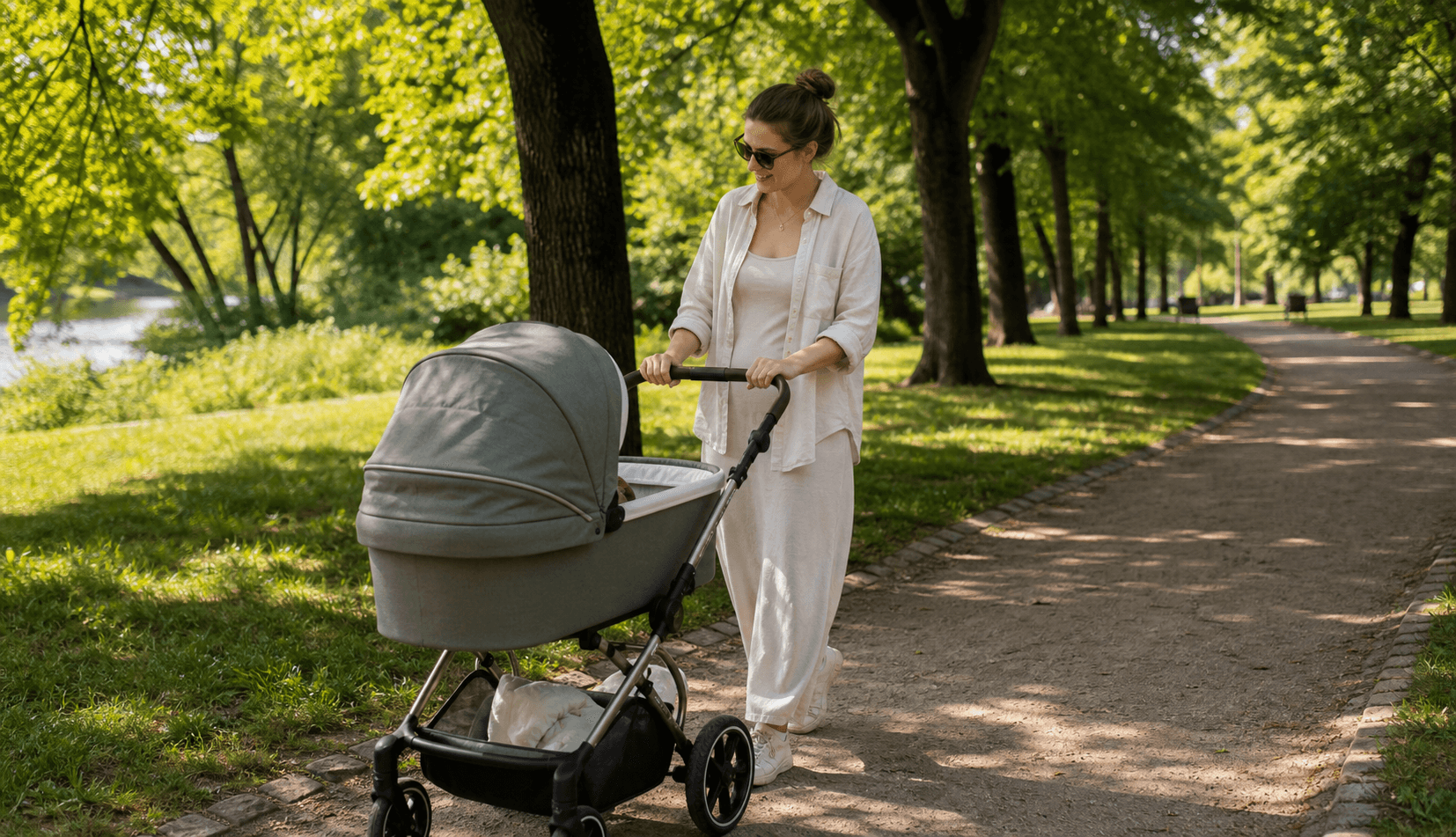
Yes, but summer stroller time needs a bit more attention than many parents expect. A stroller can warm up quickly, especially when it is still, partly enclosed, or sitting in direct sun.
A baby in a stroller usually needs:
- one light breathable outfit,
- shade from a proper parasol or sunshade,
- good airflow,
- frequent checks of the neck, chest, and overall comfort.
What matters just as much is what not to do. Never cover a stroller or pram with a blanket or cloth in a way that blocks ventilation. Even if the goal is shade, it can create a much hotter space inside.
Is it safe to carry a baby in a carrier in summer?
A carrier can still be practical in summer, but it usually gets warmer faster than a stroller because the baby also shares your body heat. That is why carrier outings often work best when they are shorter, slower, and mostly in shade.
In practice, babies in carriers often need lighter clothing than they would in a stroller. Parents also need to check more often for sweaty hair, a hot neck, flushed skin, or unusual fussiness. If the day is very hot and still, a stroller with airflow may simply be the cooler option.
How to dress for shade and direct sun
It also makes a big difference whether you are in deep shade or in direct sun. In shade with airflow, one light layer is often enough. Direct sun changes the situation much faster. That is where outings need to stay short, clothing needs to remain light, hats matter more, and quick returns to shade make the biggest difference.
How to know if a child is too hot
Parents often check hands and feet first, but they are not the most reliable guide in warm weather.
Instead, check the back of the neck, the chest, the upper back, and the child’s general mood. A sweaty neck, hot chest or back, flushed skin, damp hair, unusual fussiness, limpness, or sleepy behavior that feels “off” are more helpful signs that the child may be too hot. Cooler hands alone do not necessarily mean the child is cold.
If you want a clearer breakdown of warning signs and what to do next, see our article on sunstroke and heatstroke in babies and toddlers.
What should babies and toddlers wear at night in summer?
Night clothing depends more on room temperature than on the season itself. Some summer nights stay hot, others cool down a lot.
For babies, summer nightwear often needs to be minimal. For toddlers, very light sleepwear is usually enough. What matters most is avoiding overheating during sleep. If a child feels sweaty at night, usually the answer is fewer layers, not more. Babies also sleep best in a room that feels comfortably cool rather than warm and stuffy.
Quick guide and common mistakes
A simple guide by setting
If you want one quick overview, this is usually a good place to start:
- At home in a warm room: one light layer is often enough.
- In shade outdoors: one light layer, plus a backup layer in the bag.
- In direct sun: as little time as possible, light clothing, a hat, and quick returns to shade.
- In a stroller: one light layer, airflow, shade, no blanket cover over the stroller.
- In a carrier: usually lighter than for the stroller, because of shared body heat.
- At night: the lightest sleep setup that still matches the room conditions.
Common summer dressing mistakes
Most summer clothing mistakes come from good intentions. Parents are usually trying to protect the child, not neglect them.
The most common ones are:
- dressing for the morning and forgetting how hot midday will become,
- automatically adding a blanket to the stroller,
- leaving too many layers on in a carrier,
- assuming that indoors always means the child needs more clothes,
- treating air conditioning as a reason for heavy layers instead of small adjustments,
- keeping a hat on long after it stops helping and starts trapping heat.
Frequently asked questions
1. How many layers should a baby wear in summer?
Usually fewer than adults expect. In hot weather, one light breathable layer is often enough, especially indoors or in shade.
2. Should toddlers wear different summer clothes than babies?
Usually yes. Toddlers move more, sweat more during play, and need clothes that stay light and breathable but still practical for activity.
3. Is air conditioning okay for babies?
Usually yes, as long as the room feels comfortably cool rather than cold and the air is not blowing directly on the child.
4. Is a stroller or a carrier better in hot weather?
It depends on the day. A carrier is convenient, but often warmer because of body heat. A stroller may be cooler if it has good airflow and stays shaded.
5. Can I cover the stroller with a blanket to make shade?
No. It can reduce airflow and make the stroller much hotter inside.
6. What should a baby wear at night in summer?
Usually the lightest sleep layer that still fits the room temperature. If the baby is sweaty, they usually need less.
7. What is the biggest summer clothing mistake?
Overdressing and not adjusting quickly when the environment changes.
Conclusion
Summer dressing for babies and toddlers is less about perfect outfits and more about paying attention to the real environment around the child. Age matters, but so do shade, airflow, body heat, room temperature, and how quickly conditions change through the day.
When parents keep clothing simple, stay flexible, and check the child instead of the forecast alone, summer usually becomes much easier to manage.