Fall activities with babies and toddlers
September 10, 2026

Katka
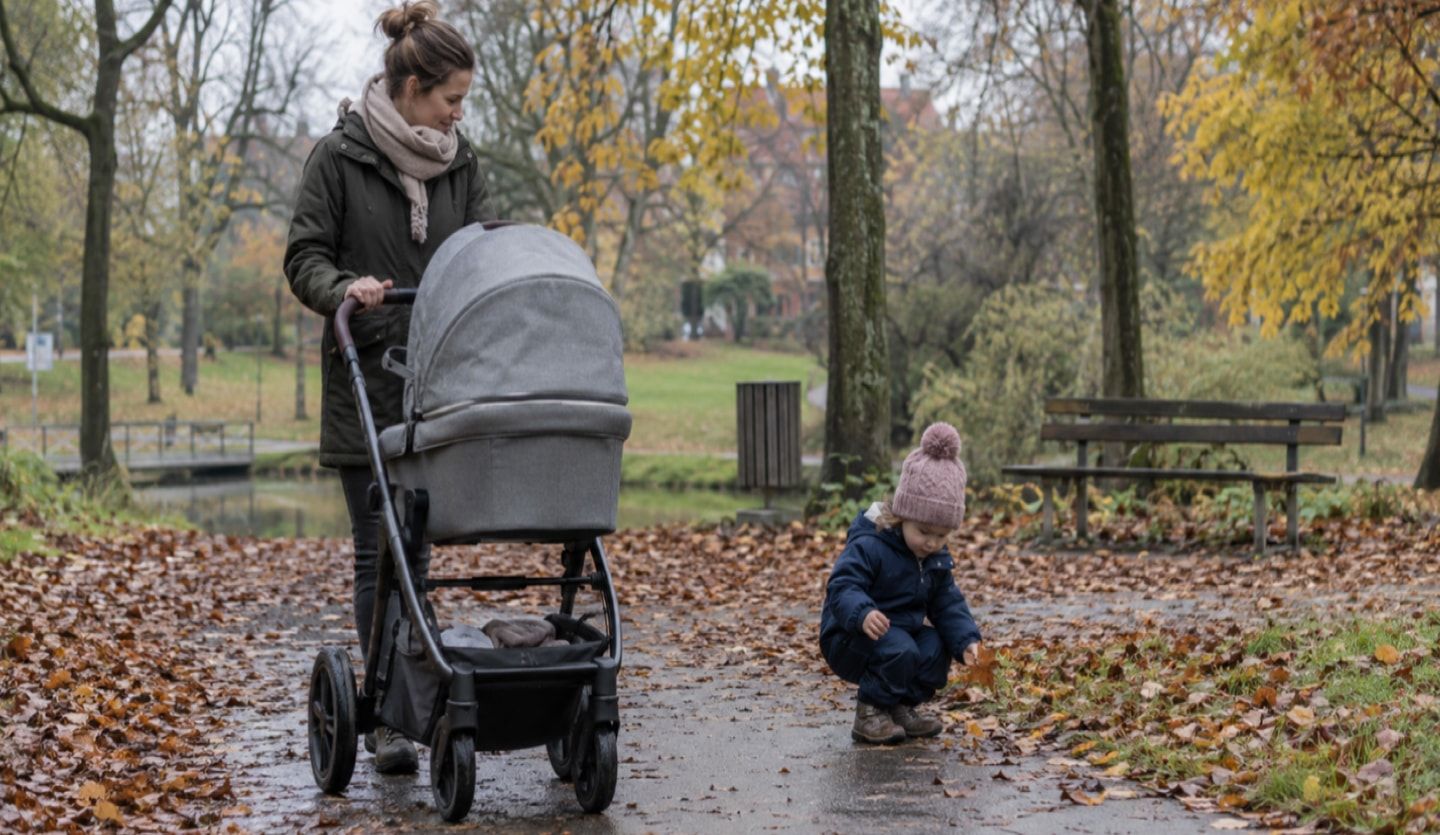
Fall activities with a baby or toddler do not need to be complicated. The summer heat has eased, parks are quieter, and even a walk to get coffee can feel like a small outing. Colorful leaves, pumpkins, puddles, and the first crisp mornings also give young children plenty to discover.
But when darkness comes early and the weather keeps changing, it is easy to spend most of the day at home and feel as if every day looks the same. If you are wondering what to do with a baby in fall, you do not have to look for activities designed only to entertain your child. A shared plan can give you a reason to go out, change your surroundings, see other people, and do something you enjoy too.
You also do not need one plan for a baby and another for a child aged one to three. The same outing can work for both in different ways. A baby may watch leaves move above the stroller, while a toddler collects, tosses, or sorts them by color.
And after a morning outdoors, Bibino can help you keep an eye on your child's nap while you warm up, make lunch, or enjoy a quiet moment elsewhere in the home.

What to do with a baby or toddler in fall
Babies discover fall mainly through sights, sounds, textures, and the comfort of being close to a parent. Toddlers are ready to take a more active role: they carry things, jump, compare colors, imitate adults, and turn almost anything into pretend play.
Remember to plan for yourself as well. A walk can lead to your favorite cafe, a trip to an orchard can include lunch, and a rainy morning does not always have to be spent at home. When the plan includes something an adult is looking forward to, it is much easier to actually leave the house.
"Parents do not have to be the entertainment crew the whole time."
A good fall activity has a simple starting point that children can explore at their own level. A baby may watch and touch, a one-year-old may pick things up and put them down, and a two- or three-year-old may sort, count, or use them for art. The parent does not have to act as an entertainer the whole time.
10 fall activities with babies and toddlers
These ideas are easy to adapt to your child's age, the weather, and the amount of energy you have that day. Some will get you outside and others are useful on rainy days, but none require a long setup or a perfectly planned schedule.
Outdoor activities
Cooler air and colorful scenery make fall a lovely time for short walks and outings. Dress for the weather, leave some extra time, and choose a destination that offers something enjoyable for both you and your child.
1. Give your walk a destination you will enjoy too
Instead of doing another loop around the block, choose somewhere you actually want to go: a favorite cafe, bakery, library, exhibition, or a bench with a good view. Going out then becomes more than a way to get the baby to sleep; it is an enjoyable part of your day too. Babies can watch branches moving and listen to leaves under the stroller wheels.
Toddlers can carry a small bag or bucket and choose a few leaves to bring home. Ask which one is biggest, brightest, or crunchiest instead of turning the walk into a long scavenger hunt. A few simple questions are often enough to hold their attention.
2. Play in a pile of leaves
Dry leaves offer sound, movement, and texture all at once. Sit a baby beside a small pile and rustle the leaves with your hands, or let them reach for a large leaf while you stay close. Avoid small pieces that may end up in their mouth.
Toddlers can stomp, kick, toss leaves into the air, fill a bucket, or help make a pile. The fun is usually in repeating the same movement, so there is no need to add complicated rules.
3. Visit a pumpkin patch, orchard, or farm
A seasonal outing does not have to last all day. For a baby, the different shapes, colors, animals, and outdoor sounds already provide plenty to take in. A short walk followed by a feed or snack may be the whole trip.
Toddlers can choose a pumpkin, look for apples on the trees, push a small wheelbarrow if one is available, or help carry something light. Pick one main experience and leave before tiredness turns a pleasant outing into a struggle.
4. Make rain part of the activity
Light rain can make a familiar place feel new. From a covered porch or beneath the stroller canopy, a baby can listen to raindrops and watch water move down a clear rain cover. Make sure air can still circulate freely around the stroller.
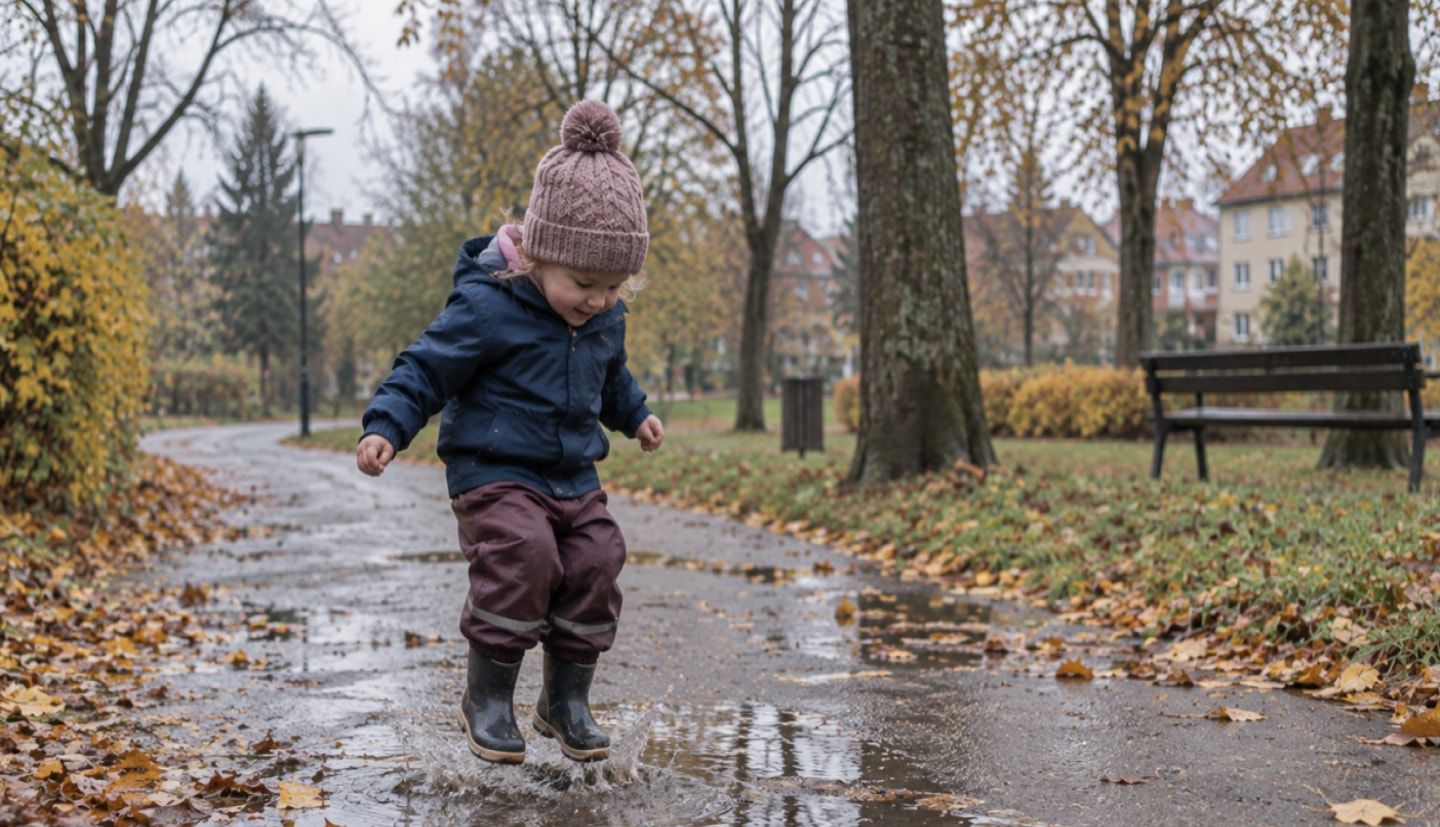
For toddlers, add waterproof clothing and choose a short puddle walk. They can test which puddles splash, float a leaf in shallow water, or watch rain run along the curb. Keep dry clothes ready so the activity can end comfortably.
5. Have a small fall picnic
Cooler weather can make a short picnic easier than it was in summer. Bring a blanket, choose a dry sheltered spot, and keep the plan simple. A baby can lie beside you, look up at the trees, or have a feed in a different setting.
For a toddler, even an ordinary snack feels special outdoors. Let them help unpack a napkin, hold their cup, or choose where everyone sits. The picnic does not need to follow a long walk; it can be the activity itself.
Activities at home
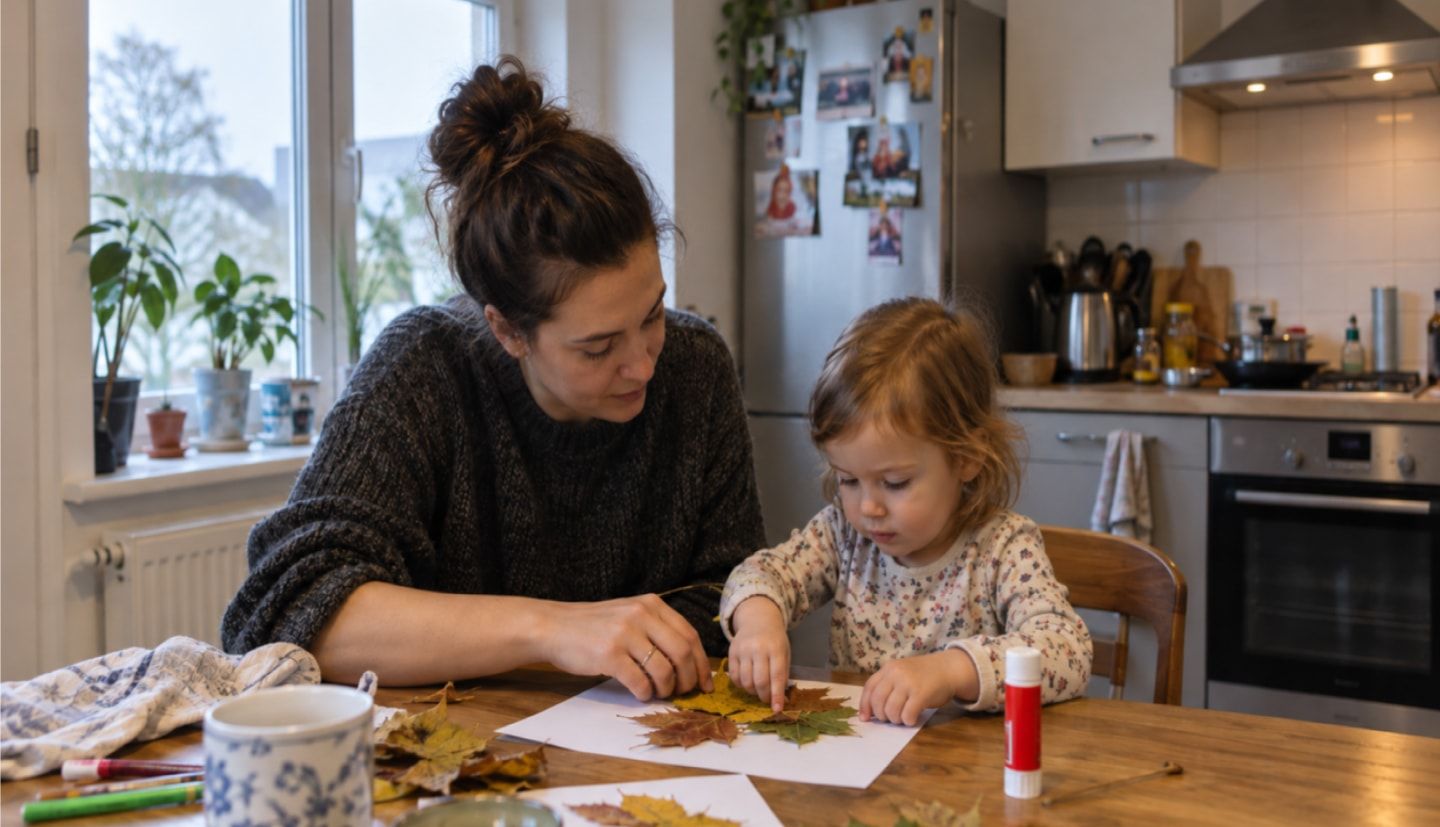
Bring the natural treasures you collected outside into your play or art at home. If it rains all day, a change of scenery can help too: a library, a cafe with a play corner, or a short visit with friends may feel better than another long afternoon in the living room.
1. Make a supervised fall discovery basket
Choose a few large seasonal objects with different textures, such as a whole small pumpkin, a large dry leaf, a smooth wooden spoon, or a piece of textured fabric in an autumn color. A baby can look, reach, and touch while an adult holds or presents each object.
An older toddler can compare the objects, move them between containers, or sort them by color and texture. Natural objects can break into small pieces, so inspect everything first, avoid acorns and other choking hazards, and stay beside the child throughout the activity.
2. Wash pumpkins and apples
A bowl of water, a cloth, and a few whole apples or small pumpkins can become an easy activity for a toddler. Let them wash, wipe, turn, and line up each item. It is repetitive, practical, and usually more engaging than it sounds.
For a baby who can sit with support, place one whole pumpkin or apple within reach and let them explore its shape and smooth surface under close supervision. There is no need to add water if that makes the setup harder.
3. Create a leaf window
Stick clear contact paper securely to a window or glass door with the sticky side facing the room. Toddlers can press large dry leaves or pieces of colored tissue paper onto it and move them around to create a simple autumn picture.
Babies can enjoy the finished window from a play mat, especially when daylight shines through the colors. Keep loose leaves and craft materials out of reach once the activity is over.
4. Paint with fall colors
Toddlers do not need to paint a recognizable tree or pumpkin. Offer two or three fall colors and let them make handprints, sponge marks, or broad brushstrokes on a large sheet of paper. Limiting the materials keeps the setup manageable and leaves more room for experimentation.
For babies, you can place small amounts of washable paint inside a firmly sealed sensory bag and tape it securely to the floor. They can press and move the colors without touching the paint itself. Check the bag carefully before and during play.
5. Find a welcoming place away from home
Not every gray morning has to be spent in your living room. Try a library or cafe with a play corner, a small museum, a botanical garden greenhouse, or an indoor play space that adults enjoy as well. It does not need to be a major trip. An hour somewhere different can make the whole day feel shorter.
For a baby, the change in light, sounds, and people may be enough. A toddler can explore books, look around a small exhibit, or play in a safe corner. Meanwhile, you can have a coffee, meet someone you like, or simply spend a little time around other people.
What to do with children on a rainy fall day
Fall weather can change quickly, and some days an outdoor plan simply will not work. Rather than preparing a completely new activity every hour, it helps to alternate movement, focused play, and quiet time.
"Young children often stay with an activity longer when it is simple."
A realistic afternoon might include a short dance or cushion course, pumpkin washing or a leaf activity at the table, and then a snack followed by a book. If the house starts to feel too small, take the book to the library or meet a friend who has a child of a similar age. Babies may be content with floor time, a song with simple movements, and one supervised sensory object at a time.
The aim is not to fill every minute. Young children often enjoy an activity longer when the setup is simple and adults do not rush them toward the next idea.
How to plan a fall day with a young child
Shorter days and changing weather can make fall routines less predictable. A loose rhythm often works better than a strict schedule:
- Morning: take a walk, visit someone, stop at a cafe, or run an errand while everyone has energy.
- Midday: come home, change any damp clothes, eat, and settle down for a nap or quiet time.
- Afternoon: choose one simple indoor activity, visit the library, or take a brief walk between showers.
- Early evening: slow down with a book, music, or familiar play before bedtime.
You do not need to arrange something special every day. The point is to keep fall from becoming an endless wait at home for better weather. Even a short trip out, time with someone you like, or a stop at your favorite cafe can be good for your child and your mood.
If your child naps after the outing, Bibino lets you see and hear them from another room while you take a moment for yourself or get on with what you need to do.
What to bring on a fall outing
Fall packing is mostly about being ready for damp ground and a quick change in weather. You may want to bring:
- a light waterproof layer,
- a spare set of dry clothes,
- a small towel or cloth,
- a blanket with a water-resistant underside,
- a bag for wet or muddy items,
- a drink and an easy snack for older children.
Check how your child feels during the outing rather than relying only on the forecast. A baby resting in a stroller may need something different from a toddler who has been running through leaves.
Staying safe during fall play
Leaves, acorns, conkers, berries, mushrooms, and small sticks attract curious hands, but many are not suitable for mouthing or unsupervised play. Choose large, clean items, inspect them for sharp or loose parts, and remain within reach. Wash hands after handling natural materials, especially before eating.
Wet leaves and muddy paths can also be slippery. Let toddlers explore, but choose a safe area away from traffic, deep water, and steep ground. At this age, a smaller space with attentive supervision is often more enjoyable than a long route full of restrictions.
Frequently asked questions
1. What are the best fall activities for a baby?
Simple sensory experiences work well: a slow walk under changing trees, listening to rain, touching a large leaf with supervision, visiting a pumpkin patch, or looking at an autumn-themed board book.
2. What are good fall activities for toddlers aged 1 to 3?
Toddlers often enjoy collecting leaves, jumping in leaf piles, puddle walks, washing pumpkins, making a leaf window, painting with fall colors, and taking short trips to an orchard or farm.
3. Can babies and toddlers do the same fall activities?
Often they can. A baby may watch, listen, and touch, while a toddler collects, sorts, carries, paints, or pretends. The setting can stay the same while the child's role changes with age.
4. What can I do with my child on a rainy fall day?
Try a short puddle walk in waterproof clothing or stay indoors for pumpkin washing, a sensory activity, movement play, songs, and a cozy book. One or two simple activities are usually enough.
5. Are leaves and acorns safe for sensory play?
Natural objects require close supervision. Avoid small items such as acorns with babies and children who still put objects in their mouths. Use large clean leaves, check for sharp or broken pieces, and remove everything after play.
6. How long should a fall outing with a baby or toddler last?
There is no ideal length. A short outing that ends while the child is still comfortable is usually more successful than staying out until everyone is cold, wet, hungry, or overtired.
7. How can I adapt a fall activity for different ages?
Keep the setting and simplify or expand the child's role. A baby can watch leaves fall, a one-year-old can place large leaves in a bucket, and an older toddler can sort them by color or use them in a supervised craft.
Conclusion
Fall activities with babies and toddlers do not mean spending weeks at home waiting for sunshine. The season already provides most of what young children find interesting: moving leaves, rain, mud, new colors, cool air, and small changes in familiar places. For parents, it can also be a chance to slow down, go somewhere different, and have something pleasant to look forward to.
Choose one simple idea, adapt it to your child's age, and leave room for them to explore it in their own way. That is often all it takes to turn an ordinary fall day into a family memory.