Winter sports with a baby: how to enjoy the snow safely and comfortably
February 23, 2026

Katka
Winter doesn’t have to mean the end of movement or adventure – you can still go outside with a baby, enjoy the snow, and even do "winter sports" in a family-friendly way. You just need to adjust your expectations, prepare well, and think about the baby's safety, warmth, and comfort. In this article, you'll find specific tips on what to do with a baby outside, how to dress them, what to watch out for, and how to set up winter activities to make them enjoyable for both of you.
If you’re planning winter trips, stays in the mountains, or just longer walks in the cold, it’s helpful to have a reliable baby monitor on hand. Bibino turns your phone, tablet, or computer into a baby monitor so you can keep an eye on your little one at home or on the go – even if they are sleeping in another room or in a stroller on the terrace.

Why Winter with a Baby is Great
Snow and cold have one advantage: it’s often quieter outside, the air is fresh, and many babies surprisingly sleep well in the cold. Winter walks also:
- support acclimatization (gently and naturally),
- help establish the daily rhythm,
- improve the mood of parents (and often the baby too),
- create family rituals that will be useful in the coming years.
Winter sports with a baby don’t mean "skiing down a black run." Instead, it’s about safe winter activities: walks in the snow, trips with a stroller, sledding with an older sibling (without the baby in the sled), snowshoeing with a carrier, cross-country skiing with the baby in a trailer (for the experienced), or staying in the mountains at a relaxed pace.
When is a Baby "Ready" for Winter Activities
It depends on age and mainly on how you want to carry out the activity (stroller vs. carrier vs. special equipment). In general:
- 0–3 months: short, calm walks, mostly in a stroller. Babies are still not good at regulating their temperature.
- 3–6 months: longer walks, snow is no longer an issue, but caution with wind and humidity still applies.
- 6–12 months: more options – carrier, first "snow play," trips, stays in the mountains.
- 1 year+: you can start planning more "family winter sports," even though the child still needs frequent breaks.
The most important thing isn’t age, but comfort, warmth, and safety – as well as whether you yourself have enough energy and peace.
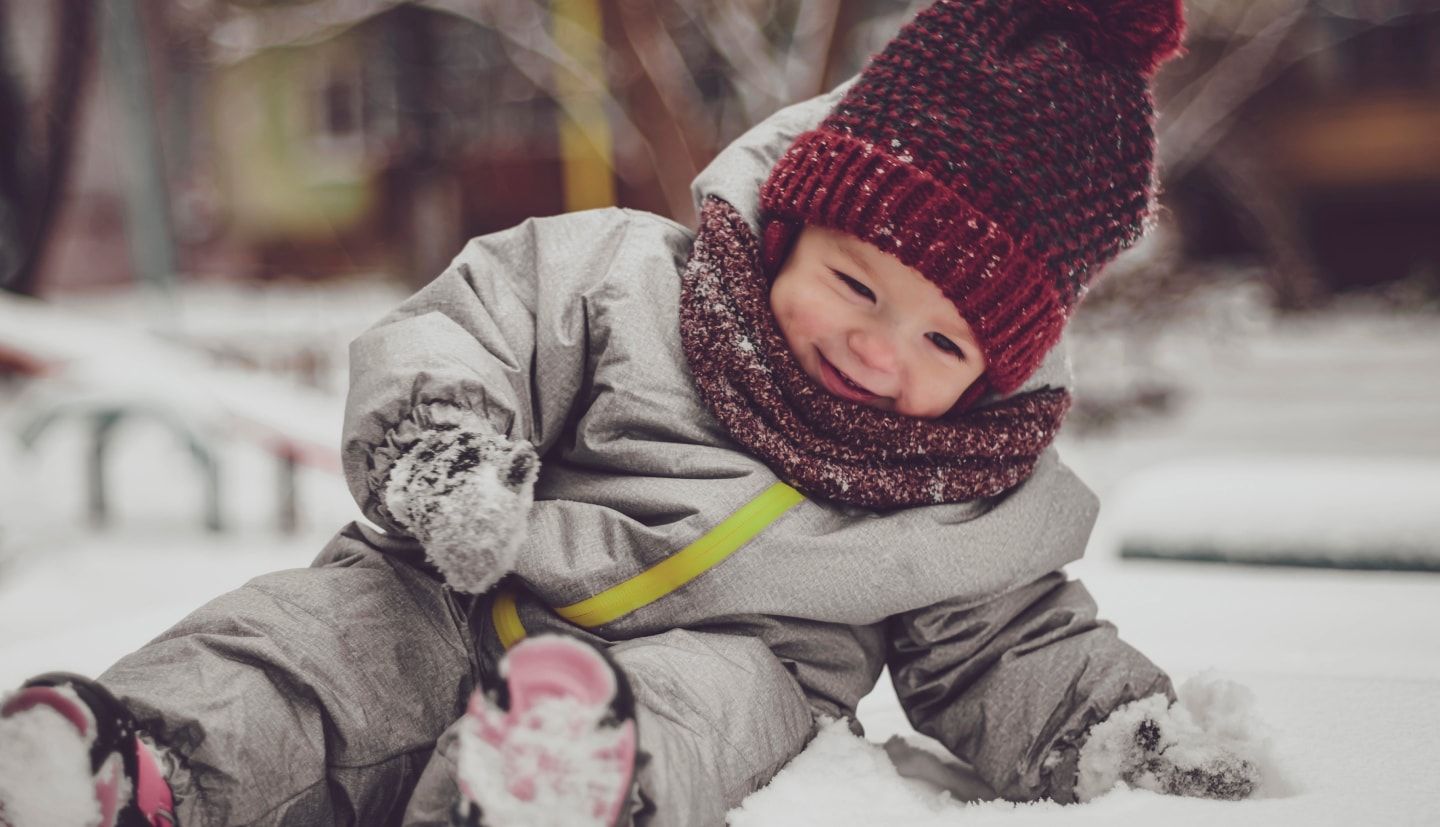
The Foundation of Winter Comfort: Layering and Protection from Moisture
If you want to spend time outside with your baby, it’s most rewarding to refine dressing. Winter sports mean movement – sometimes you get warm, but the baby in the stroller hardly moves at all.
Clothing Layering – How to Do It
A simple rule works well:
- Base Layer (against the body): breathable, ideally merino or functional material. Cotton can absorb moisture and get cold.
- Middle Layer (insulation): fleece, wool, insulated overall.
- Outer Layer (protection): snowsuit or sleeping bag + protection from wind and snow.
Stroller vs. Carrier In a stroller, the baby usually needs one extra layer (as it is static, wind blows on it). In a carrier, they warm up with you – often fewer layers are sufficient, but you need to manage the protection of limbs and head.
What to Check During a Walk
Instead of icy little hands (which is common even with a warm baby), keep an eye on:
- the nape (should be warm, not sweaty),
- thighs/trunk (should not be cold),
- signs of discomfort (crying, restlessness, apathy).
Do you want to learn more about dressing a baby in winter, suitable materials (merino, fleece, functional layers vs. cotton), and practical layering for different temperatures? Check out our detailed guide How to Dress a Baby in Winter.
What to Watch Out for When Dressing
Winter activities with a baby are lovely, but there are a few risks to keep under control:
- Wind: often worse than the cold temperature itself. Wind + moisture = rapid chilling.
- Moisture and snow: soaked gloves, socks, or sleeping bags can ruin an entire trip.
- Overheating: even in winter, a baby can sweat (especially in a carrier or car).
- Sun: snow reflects UV rays. In the mountains, this is noticeable even in frost.
- Sudden temperature changes: for example, transitioning from outside to a overheated restaurant or car.
Tip: When heading out for a longer winter trip, always have a spare dry layer in your bag (bodysuit and socks/tights).
What "Winter Sports" You Can Do with a Baby
Here are activities from the simplest to the more demanding. For each, I add tips to make it realistically doable.
1. Walking in Snow (Sport #1)
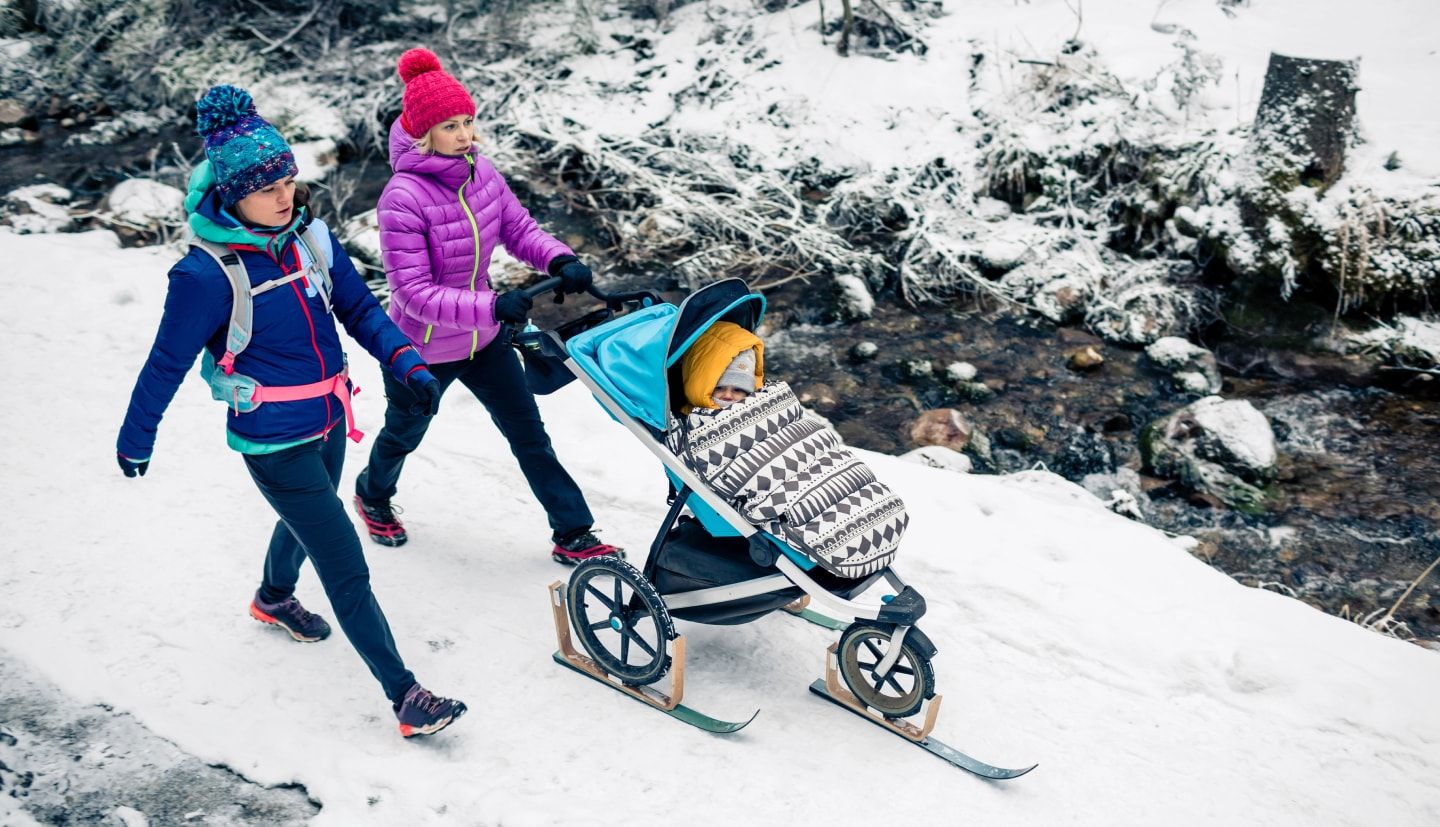
It may not sound like a sport, but pushing a stroller through slushy snow is often great training. Tips:
- Consider a stroller with good wheels or a sled/winter chassis (if you have one).
- A sleeping bag is great, but watch for ventilation to ensure the baby doesn't get too warm.
- On shorter routes, it pays to go slower, take breaks, and give the baby time to sleep.
2. Sledding with a Surround: Ideal Winter "Sport" for Parents and Baby
If the baby can sit steadily (typically around 6–9 months, but it depends on the child), a great winter activity can be sledding with a surround/backrest. The child sits more securely in this than on classic sleds, and you can gently pull them through the snow – perhaps on flat ground, on a packed path, or in the park. For the baby, it’s fun (new experiences, "ride," snow around them) and surprisingly good exercise for parents: pulling the sled is physically more demanding than a walk, so the mom (or dad) often warms up pleasantly and "breaks a sweat" even in the cold.
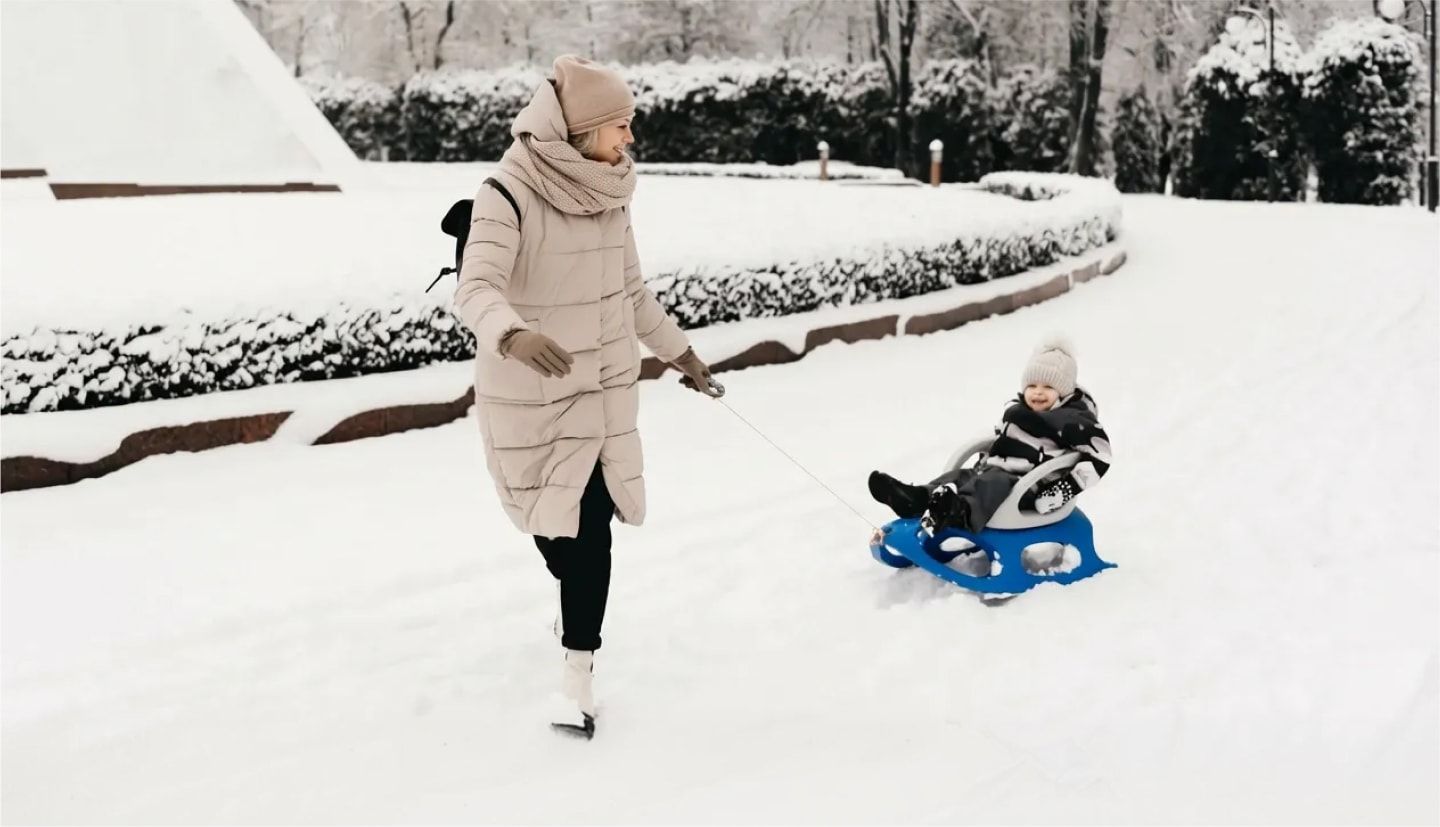 To make it safe and comfortable:
- choose flat terrain or only very gentle slopes (no steep hills),
- always secure the child, if the sled allows for it, and monitor seating stability,
- watch out for wind in the face (hood/scarf, deeper sleeping bag, shade),
- regularly check the nape and dryness in the gloves/socks,
- add a layer against moisture (or a mat in the sled).
Sledding with a surround is also great for families with an older sibling – you pull the baby while being "in action" outside, entertaining everyone.
3. Winter "Playground": Snow, Touching, Observing
For babies (about 6 months+), snow is an enormous sensory experience. What to do:
- "show" the snow in hand (briefly and gently),
- let the child watch falling flakes,
- do a quick photo session or build a snowman (mostly for you, the baby will just watch).
Caution: snow on bare skin only for a moment. And when the baby puts their hands in their mouth, watch to ensure they don’t swallow snow.
4. Visiting a Winter Resort "Without Skiing"
Even if you’re not skiing, you can enjoy the atmosphere of the mountains. What works:
- take a lift up (if it makes sense and the baby can handle it),
- walks on groomed paths,
- a calm sit with a view (briefly and with the baby comfortable).
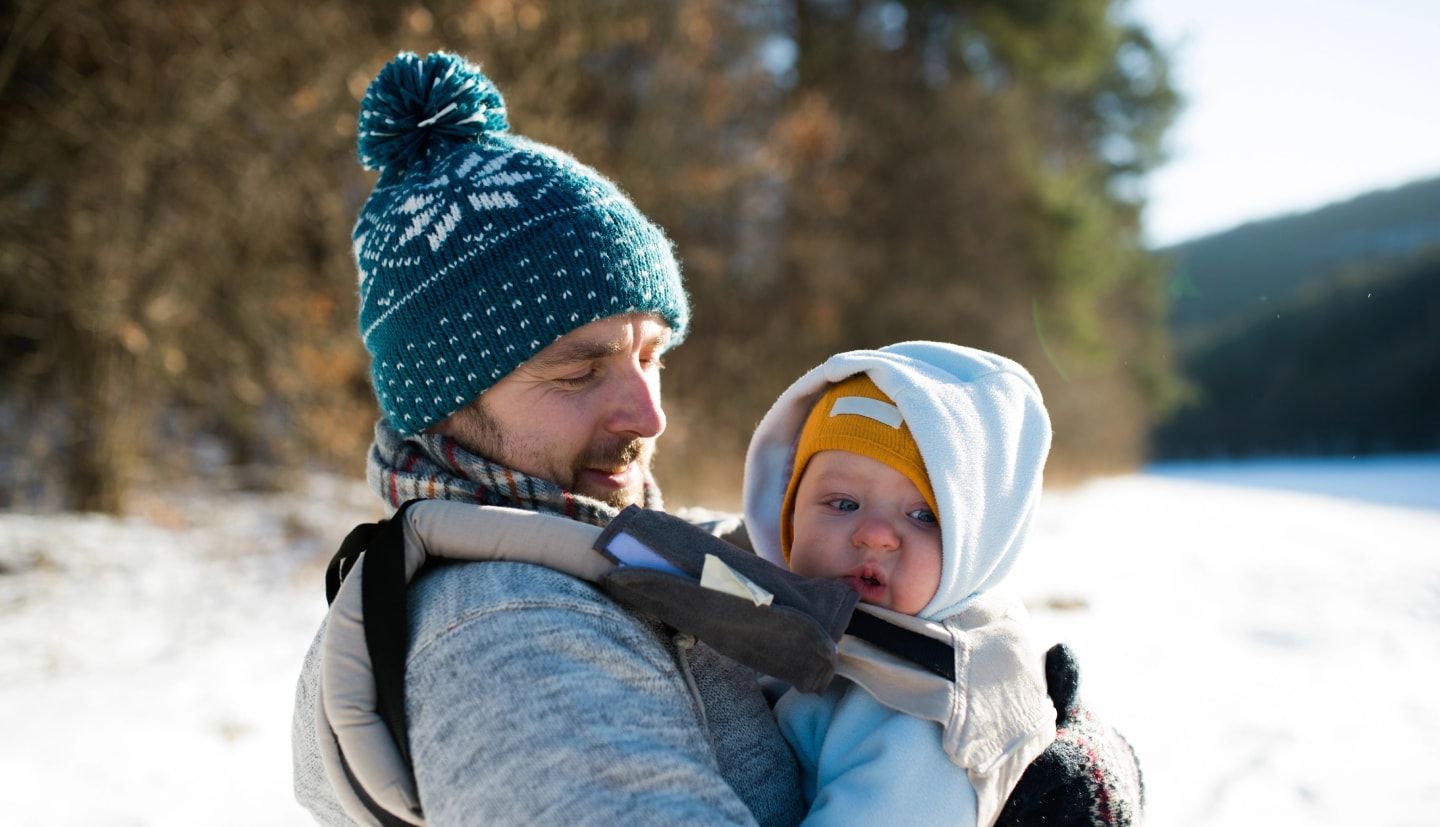
5. Snowshoeing with a Baby in a Carrier (for parents who hike)
A great activity if you have experience with a carrier and winter hiking. Safety tips:
- Choose a route without steep slopes and avalanche risk.
- The baby must have their head, neck, hands, and feet protected (as they can often get cold in a carrier).
- You manage stability – snowshoes are fine, but keep in mind you don’t want to slip with a child on your body.
6. Cross-Country Skiing with a Bike Trailer (mostly for experienced)
A wonderful option for winter movement is a bike trailer with a winter/cross-country ski set (instead of wheels, there are skis). However, it’s important to say plainly: this activity is only for parents who really know how to ski. Braking is harder with a trailer, maneuvering is more difficult, and stability changes with uneven terrain – it’s not suitable for beginners. To make it safe and comfortable:
- skip steep descents: choose wide, groomed, and rather flat routes,
- have stop points: huts, refreshments, parking areas, or places where you can shorten the route (you can warm up or safely end at any time),
- choose a shorter loop and keep a conservative pace,
- check the equipment: correct connection of the winter kit and the attachment of the tow bar/harness,
- wrap the baby well: in the trailer, they don’t move, so they need more warmth (sleeping bag, blanket, wind protection) and regularly check their nape.
If you’re unsure about your skiing technique, it’s better to stick to walks or snowshoeing and save cross-country skiing with the trailer for when you really have skiing "in your hands."
7. Sledding: better with an older child, baby just as a spectator
I wouldn’t recommend sledding with a baby in your arms or on the sled – the risk of falling and injury is too high. If you have older kids, the baby can be: in a stroller in a safe spot, in a carrier, but off the hill and out of the path of sleds, or warm with the other parent.
How to Plan a Day in the Mountains with a Baby
When you have a baby, planning is half the success. It works best to stick to a simple rhythm: go outside first thing in the morning when the baby is usually calm, and the conditions are often best. Morning naps often "happen by themselves" outside – in a stroller or a carrier – allowing you to enjoy a pleasant walk without stress. Around lunchtime, it's ideal to include a short break in warmth, ideally not in an overheated room, so the transition from outside isn’t overly taxing for the baby. In the afternoon, usually a shorter activity or quiet walk suffices, and it’s good to think about an early return – darkness, cold, and fatigue can quickly dampen a good mood.
And above all – expect that performance won’t be like it used to be, but you can enjoy the experience itself and the relaxed atmosphere even more.
What to Pack for a Winter Trip with a Baby
- Spare clothing for the baby: bodysuit + warm layer (pants/leggings), socks/tights, possibly spare gloves.
- Essentials for head and neck: warm hat + spare (when they sweat), neck gaiter/hood depending on the weather.
- Keep hands and feet warm: gloves/sleeves (for smaller children, often resolved by a sleeping bag), possibly boot covers.
- Extra blanket: one "safety" layer is always useful – for covering during the wind, waiting, or when the baby falls asleep.
- Protection from frost and sun: cold cream (depending on skin type), lip balm for you, sunglasses/shade (can be surprising on snow).
- Diapers and hygiene: diapers, wet wipes, trash bag, paper tissues, small hand sanitizer.
- Changing in the field: a small changing mat + a disposable mat on top (when it's wet/dirty).
- Feeding outside your base: seating mat/insulating seat (great for benches, stumps, cars), muslin/scarf for covering or wind protection, for formula: prepared portions, thermos with warm water, nipple/bottle, possibly a warming bag.
- Food and drink for parents: snacks that won't freeze and provide energy (e.g., nuts, bars, bread, dried fruit) + thermos with warm drinks.
- "Parental gear" for winter: spare gloves (wet gloves are hell), thin hat/headband for pocket, power bank (cold drains the battery faster).
- Safety and comfort: small headlamp (when it gets dark sooner), reflective item, small first aid kit (band-aids, disinfectant).
If you’re traveling by car: add a thinner layer (e.g., a sweatshirt) for the baby and deal with warmth with a blanket after buckling them in – a baby shouldn’t be in a bulky winter suit in the car seat to ensure safe tightening of the belts.
How to Know When It’s Time to Go Home
Sometimes the best "winter sport" is an early retreat. Pay attention when:
- the child is unusually restless and nothing helps,
- they are cold on the trunk or the nape,
- on the contrary, they are sweaty and damp,
- they start to be sleepy "differently than usual" (apathetic),
- you are tired and start losing attention.
The joy of winter lies in leaving home while still in a good mood.
Winter Activities and Sleep: Why Cold Can Be an Advantage
Many babies sleep better outside in winter – the cooler air, monotonic movement of the stroller, and white noise of the wind. That’s great news… until you're somewhere at a cabin and the baby is sleeping in another room or outside on the terrace and you want to be assured that everything is okay. This is where a reliable monitor comes in handy.
Bibino: Peace on Winter Trips and at Home
Whether you are in the mountains, at grandparents, or just want to keep an eye on the baby during their afternoon nap in the stroller in the garden, Bibino helps turn your phone or tablet into a baby monitor – without needing a special camera. What’s most useful in winter?
- you can let the baby sleep and be sure to hear them,
- as soon as they wake up, you know right away and don’t need to "check every five minutes",
- when traveling, you can use devices you already have.
Summary: Winter Sports with a Baby without Stress
Winter activities with a baby are not about performance, but about comfort. When you keep an eye on:
- layering and dryness,
- protection from wind,
- a realistic plan for the day,
- a safe choice of activity, you can enjoy a beautiful winter filled with walks, snow, and little family adventures. And if you want to have peace during trips even while the baby sleeps, Bibino is a simple helper that comes in handy both at home and on the go.